

Injection site rotation: why it matters and how to do it
Why repeated injections in one spot cause lipohypertrophy, how far apart to space sites, and simple rotation patterns for abdomen, thigh and arm.
Read articleLeft a compounded semaglutide vial out of the fridge, or did it arrive warm? Why your pharmacy label sets the rules and when to call before using it.
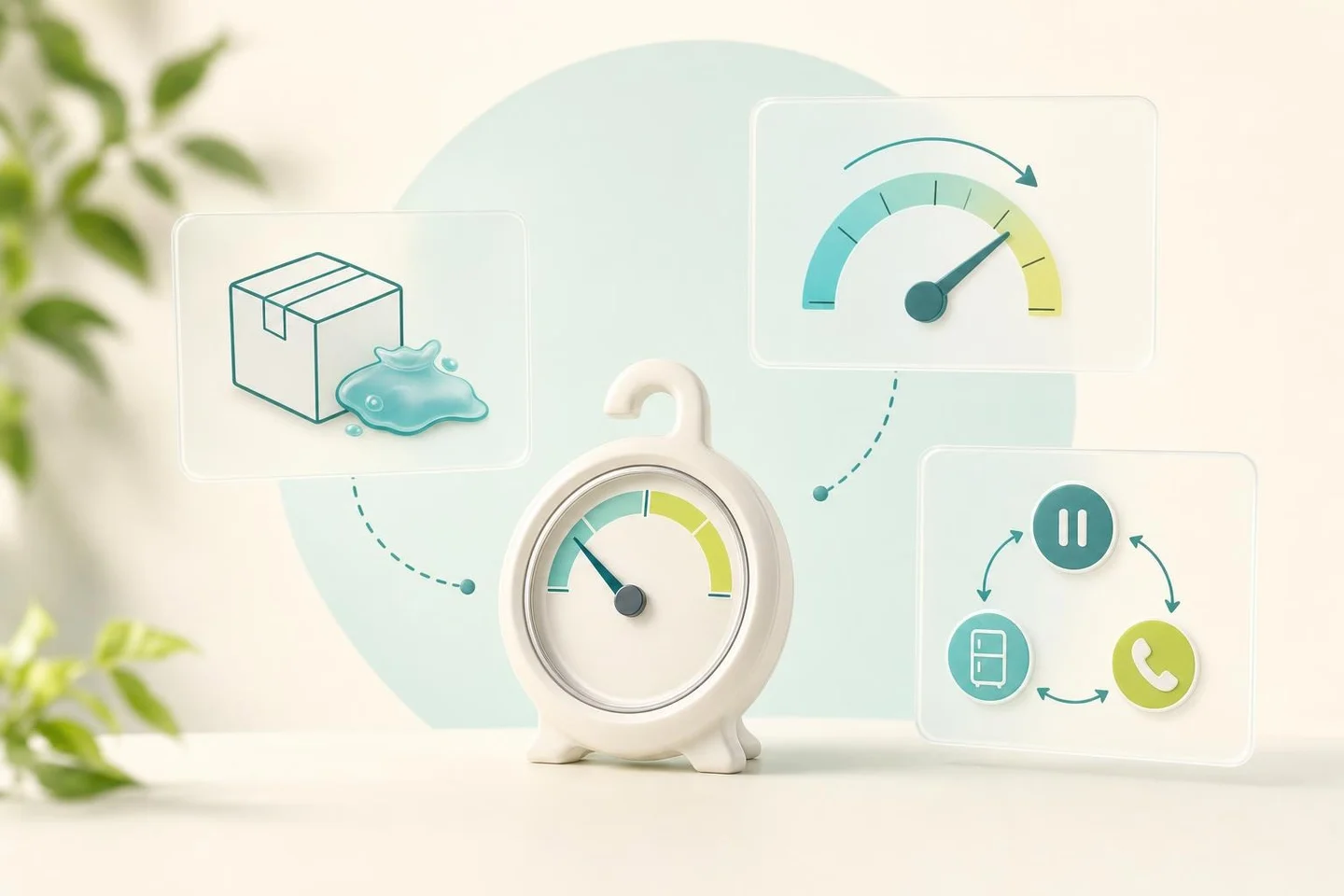
If your compounded semaglutide was left out of the fridge, don't guess whether it is still usable. How long a compounded preparation can safely be out of the refrigerator is set by the pharmacy that made it, and it is printed on your label, not on a brand-name package insert. Before you use a vial that got warm, froze, changed color or turned cloudy, call your pharmacy or care team.
This guide explains why the rules differ, what to check and what to do next.
A compounded medication is prepared by a pharmacy for an individual patient. It is not an FDA-approved drug. FDA explains that this means the agency does not verify the safety, effectiveness or quality of compounded drugs before they are marketed.
That matters for storage. Brand-name products come with storage instructions based on the manufacturer's testing of that exact product. A compounded vial is a different preparation. Its ingredients, concentration and container can differ from one pharmacy to another, and even between fills. So the storage limits you may read online for a brand-name pen do not transfer to your compounded vial.
Your compounded vial's storage instructions and its beyond-use date come from the dispensing pharmacy. USP, the organization that writes pharmacy compounding standards, lists storage conditions among the factors pharmacies consider when setting how long a sterile compounded preparation can be used.
The short version: your label and your pharmacy are the authority. A number you read on a forum, or on another product's insert, is not.
FDA has received complaints that some compounded GLP-1 drugs arrived warm or with too few ice packs to keep them at the recommended temperature. The agency recommends that patients not use any injectable GLP-1 drug that arrives warm or without enough refrigeration, because this can affect the drug's quality.
If your package arrives warm, or the cold packs are fully melted and the contents feel warm:
Everyday slips happen. You might leave a vial on the counter overnight, forget it in a bag, or find the fridge was off after a power cut. The steps are the same as for a warm delivery:
Heat is not the only risk. FDA advises avoiding extreme high or low temperatures for medicines and warns that medicines that aren't stored properly may not work as well or may cause harm, even if they are not expired. A vial that froze, for example in the back of a cold fridge, needs the same call to the pharmacy as one that got warm.
Look at the vial against a light before every dose. MedlinePlus advises not using medicine that has changed color, texture or smell, even if it has not expired. For a compounded injection, contact your pharmacy or care team before using it if you notice:
FDA also lists medicine that "looks different" from what you received before, or that arrives in broken or damaged packaging without instructions for use, as a warning sign worth raising.
Good habits make mix-ups less likely:
Storage is closely linked to how long a vial can be used. Our guide to beyond-use dates on compounded medications explains what that date on the label means. If you are also learning to measure doses, read how units relate to mg on a compounded injection.
Compounded medications such as semaglutide and tirzepatide are prescription medicines. Any questions about a specific vial belong with your pharmacy or care team.
There is no single answer that applies to every compounded product. The dispensing pharmacy sets the storage limits and prints them on your label. If your situation isn't clearly covered, contact the pharmacy before using the vial.
Yes, putting it back in the fridge is a sensible first step so it doesn't warm further. But returning it to the fridge doesn't confirm it is still usable. Call your pharmacy or care team before you take another dose from it.
Don't use it until you have spoken with your pharmacy. Cloudiness, color change or particles can be signs of a problem. The pharmacy can tell you what the preparation should look like.
Treat it like a vial that got too warm. Don't inject from it, keep it cold, and contact your pharmacy or care team for instructions.
Why repeated injections in one spot cause lipohypertrophy, how far apart to space sites, and simple rotation patterns for abdomen, thigh and arm.
Read articleWhat a normal injection site reaction looks like, what a lump or redness means, and the signs of infection or allergy that need prompt care.
Read articleStep-by-step subcutaneous injection technique from MedlinePlus and FDA guidance: sites, rotation, angle, insulin syringe units and sharps disposal.
Read articleOpening soon
SimpleHumans is opening soon. Join the early-access list and you'll be first to know when we launch — plus an exclusive discount reserved for people who sign up before we open.
You're on the list
Thanks for joining. We'll email you when we launch, along with your founding-member discount.

