

How Long Do Hot Flashes Last? What SWAN Found
SWAN found frequent hot flashes and night sweats lasted a median of 7.4 years, and about 4.5 years past the final menstrual period.
Read articleWhat causes night sweats in menopause, how they break up sleep, cooling and behavioral steps, treatment options, and the red flags worth a workup.
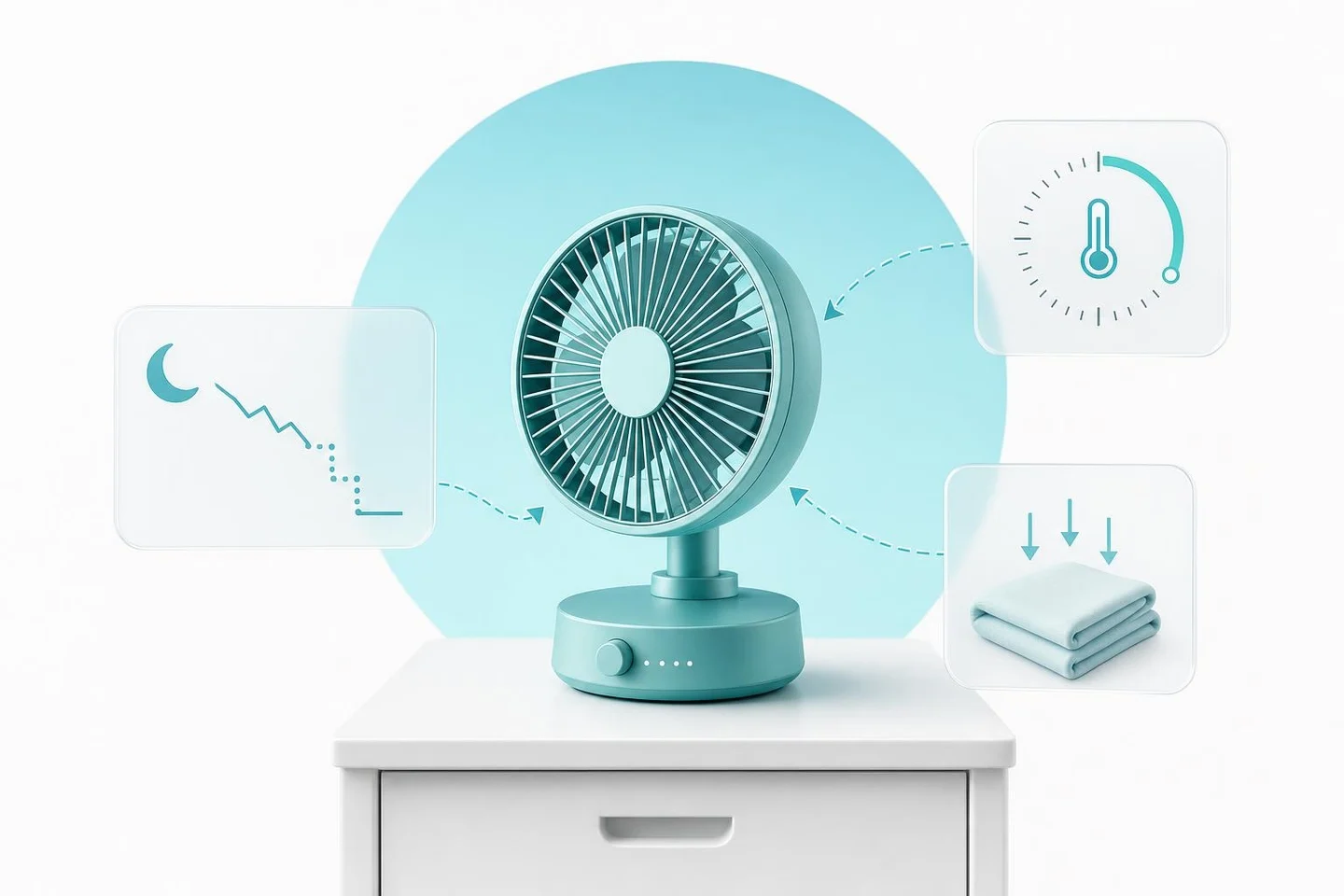
Night sweats in menopause are hot flashes that happen while you are asleep: a sudden wave of heat with sweating, sometimes enough to wake you and soak your nightclothes. They come from the same change in temperature regulation that causes daytime hot flashes during the menopausal transition. Their main cost is usually sleep, because the awakening often lands at the same moment as the flash.
Night sweats are common, but they are not the only reason an adult sweats at night, and some patterns deserve a medical evaluation rather than a cooler bedroom.
A hot flash is a sudden sensation of heat, often with flushing and sweating, that happens when core body temperature moves within a narrowed thermoneutral zone, the range the body tolerates before it starts sweating or shivering. A night sweat is simply a hot flash that occurs during sleep.
A review of sleep in the menopausal transition published in Sleep Medicine Clinics describes most flashes as lasting one to five minutes, with some lasting up to 60 minutes. The same review states that vasomotor symptoms, the umbrella term for hot flashes and sweating, affect up to 80% of women during the menopause transition, and that sleep disturbances are reported by 40% to 60% of menopausal women.
Night sweats usually show up alongside other changes, which are listed in our guide to menopause symptoms and what helps.
The link between nighttime vasomotor symptoms and broken sleep is well documented, though not every flash wakes you.
Longitudinal data from the Study of Women's Health Across the Nation (SWAN), described in that Sleep Medicine Clinics review, found that women with moderate to severe hot flashes were almost three times more likely to report frequent nighttime awakenings than women without hot flashes.
Laboratory work adds detail. In a study by de Zambotti and colleagues summarized in the same review, an awakening occurred at the same time as 69% of hot flashes, and wake time attributed to hot flashes accounted for an average of 27% of measured time awake after falling asleep.
The review makes another point: not all women with menopause-related sleep problems report hot flashes at all. Mood changes, life stress, medications, other medical conditions and primary sleep disorders can all disturb sleep in the same years, and they interact, which makes a single cause hard to pin down.
For milder night sweats, the first steps are environmental. A Mayo Clinic physician writing for Mayo Clinic News Network notes that light sweat on the brow or pillow is common as the brain resets body temperature overnight, and that adjusting room temperature or removing extra bedcovers resolves the problem for many people.
The same piece notes that sweating enough to require changing your nightclothes or sheets is more significant and worth a medical visit.
If the bigger problem is that you cannot get back to sleep, cognitive behavioral therapy for insomnia (CBT-I) is worth asking about. CBT-I is a structured, short-course therapy that targets sleep habits and the thoughts that keep people awake, and the Sleep Medicine Clinics review describes it as the primary intervention for chronic insomnia. In a randomized trial it summarizes, eight weeks of CBT-I in peri- and postmenopausal women who had insomnia symptoms and daily hot flashes produced a greater reduction in insomnia symptoms than a menopause education control, with improvements still present six months later. That trial measured insomnia, not sweating.
Hormone therapy is estrogen, combined with a progestogen for women who still have a uterus, or estrogen alone after hysterectomy. The Sleep Medicine Clinics review describes it as the most effective treatment for menopausal symptoms, and cites a meta-analysis finding that hormone therapy modestly improves self-reported sleep disturbance, usually alongside improvement in vasomotor symptoms. Sleep-laboratory studies of hormone therapy are few and their results conflict.
Risks are part of the same conversation. That review notes that oral, but not transdermal, hormone therapy raises the risk of venous thromboembolism, and that combined therapy carries a slightly increased breast cancer risk that appears related primarily, though not only, to the progestogen. It states that contraindications should be evaluated before starting, including a history of breast or gynecological cancer, venous thromboembolism or severe cardiovascular disease, and that treatment should use the lowest effective dose, transdermal when appropriate, with duration individualized.
MedlinePlus lists headache, breast pain or tenderness, nausea, mood changes and redness or irritation of the skin where estradiol is applied among the side effects of estradiol given through the skin. For oral progesterone it lists headache, breast tenderness or pain, upset stomach, tiredness and mood swings. Its progesterone page says to call a doctor right away for unexpected vaginal bleeding, breast lumps, chest pain or shortness of breath, swelling or pain in an arm or leg, or sudden severe headache or vision changes.
SimpleHumans offers bioidentical estrogen cream with oral progesterone prescribed by a clinician, who sets the form and dose after reviewing your health history. These are compounded medications. Compounded drugs are not FDA-approved, which means FDA does not verify their safety, effectiveness or quality before they are marketed. Evidence about hormone therapy in general, including the studies above, was not generated with compounded products and should not be read as evidence for them. For what to watch for with topical estrogen, see our article on estradiol cream side effects.
When hormone therapy is not appropriate or not wanted, there are prescription alternatives your own clinician can consider, and the evidence for sleep is modest rather than strong. They are not offered here.
The Sleep Medicine Clinics review reports that low-dose selective serotonin and serotonin-norepinephrine reuptake inhibitors reduce hot flashes to some extent and modestly reduce insomnia symptoms in women who have hot flashes, and that their side effect profiles need careful consideration first. It also notes that evidence from a single trial showed gabapentin improved sleep quality in perimenopausal women with hot flashes and insomnia. One trial is a thin base for a recommendation.
Which option fits depends on your history, other medications and what bothers you most.
Night sweats are common and often harmless, but some deserve evaluation for a cause other than menopause.
Mayo Clinic advises seeing a physician if night sweats are a new symptom, particularly with red flags such as fever, decreased appetite, weight loss, swollen lymph nodes or rash. Infections including tuberculosis, other bacterial infections and fungal diseases can cause night sweats, as can disorders of the nervous system or hormone-producing glands, and occasionally cancer. Heavy sweating can also be a side effect of medications, including antidepressants and hormone therapy.
Mayo adds that even without those red flags, night sweats that are new and worrisome, or that happen regularly and interrupt sleep, are reason enough for a visit.
During the menopausal transition, the usual explanation is a nighttime hot flash: the review above describes awakenings happening at the same time as most measured hot flashes. Sweat heavy enough to require a change of nightclothes or sheets is more significant than light sweat on the pillow, and Mayo Clinic suggests having it looked at, especially if it is new or comes with fever, weight loss, appetite loss, swollen lymph nodes or rash.
Yes. The Sleep Medicine Clinics review notes that not all women with menopause-related sleep problems report hot flashes, and that the impact of hot flashes on sleep varies widely between women.
Sleep-disordered breathing becomes more common after menopause and can disturb sleep in the same years. In the Wisconsin Sleep Cohort, described in the same review, postmenopausal women were 2.6 times more likely to have an apnea-hypopnea index of five or more per hour and 3.5 times more likely to have an index of 15 or more, compared with premenopausal women, after adjusting for age, body mass index and smoking. The review also notes women with sleep-disordered breathing are more often underdiagnosed than men. Snoring, gasping, or daytime sleepiness that does not match how long you slept are reasons to ask about testing.
No treatment can be promised to end them. The research above reports average effects in groups of women, with wide variation between individuals, and hormone therapy studies measured self-reported sleep and vasomotor symptoms rather than a complete end to sweating. A clinician can help you weigh what each option is likely to do against your own risk factors.
SWAN found frequent hot flashes and night sweats lasted a median of 7.4 years, and about 4.5 years past the final menstrual period.
Read articleHot flashes start in the brain's temperature control center. How falling estrogen narrows the thermoneutral zone, and what else causes flushing.
Read articlePerimenopause is the transition of changing periods; menopause is 12 months after the last one. How the stages differ in timing, symptoms and testing.
Read articleOpening soon
SimpleHumans is opening soon. Join the early-access list and you'll be first to know when we launch — plus an exclusive discount reserved for people who sign up before we open.
You're on the list
Thanks for joining. We'll email you when we launch, along with your founding-member discount.

