

Night Sweats in Menopause: Causes and What Helps
What causes night sweats in menopause, how they break up sleep, cooling and behavioral steps, treatment options, and the red flags worth a workup.
Read articleHot flashes start in the brain's temperature control center. How falling estrogen narrows the thermoneutral zone, and what else causes flushing.
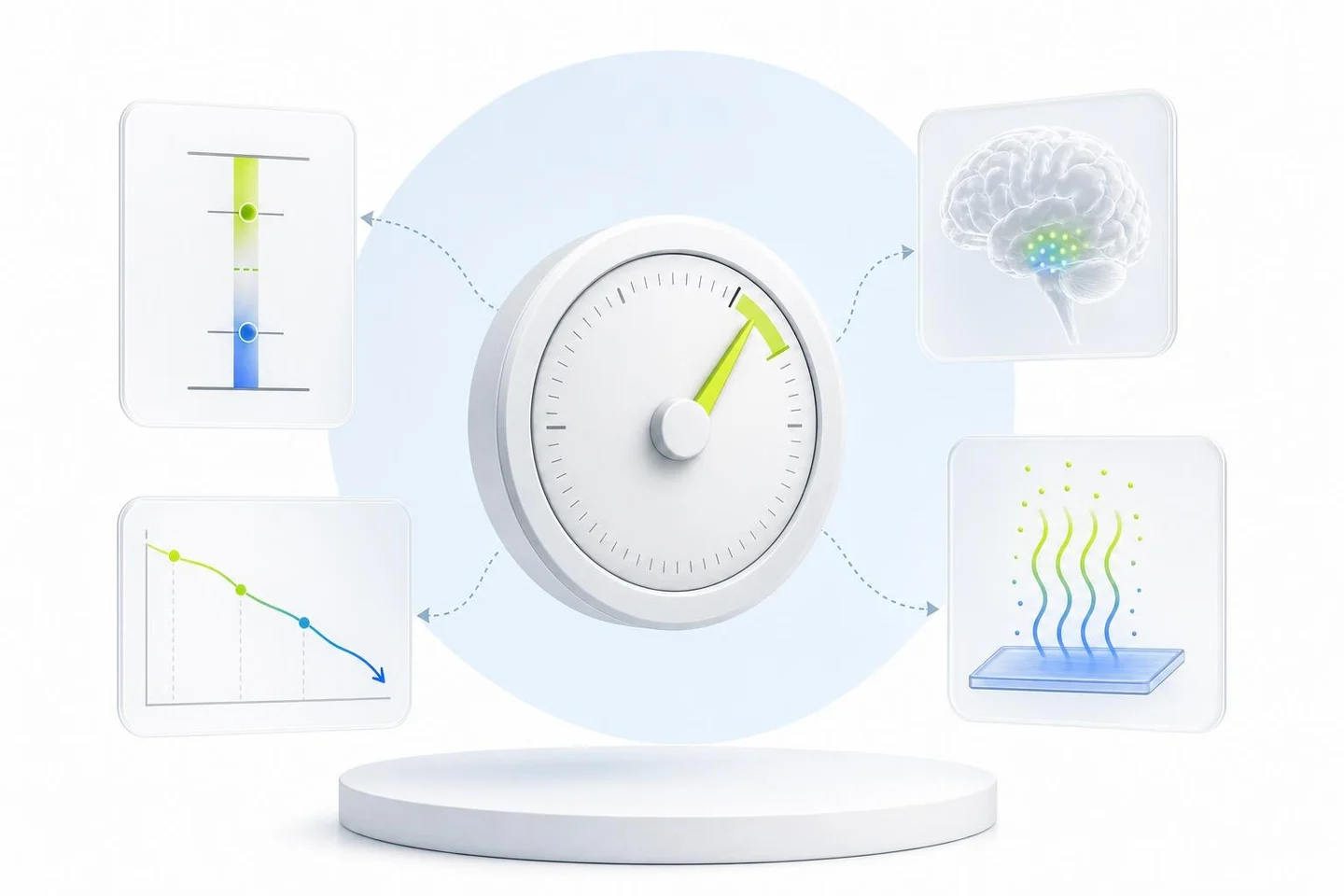
A hot flash is a sudden wave of heat, usually felt in the face, neck and chest, often with sweating and sometimes a chill afterward. Mayo Clinic says changing hormone levels before, during and after menopause are the most common cause, and that most research suggests hot flashes happen when lower estrogen levels cause the hypothalamus, the body's internal thermostat, to respond to slight changes in body temperature and start the cooling response. Mayo Clinic also says it is not clear how those hormone changes cause hot flashes.
A hot flash is a short episode of heat that starts without warning. NICHD describes it as a sudden feeling of heat that may include flushing of the face and neck, red blotches on the chest and arms, and sweating followed by shivering. Mayo Clinic's symptom list is similar, and adds a fast heartbeat and feelings of anxiety.
The two sources give different lengths for one flash. NICHD says 30 seconds to 10 minutes, and Mayo Clinic says 1 to 5 minutes.
Hot flashes during sleep are called night sweats. Mayo Clinic says they can wake you and cause long-term sleep loss, and NICHD says long-term lack of sleep can lead to fatigue, lack of energy and memory problems. Mayo Clinic also says most people who have hot flashes have them daily, for an average of more than seven years, and some people have them for more than 10 years.
Falling estrogen and the brain's temperature control. Mayo Clinic says changing hormone levels before, during and after menopause are the most common causes of hot flashes, and that most research suggests they happen when lower estrogen causes the hypothalamus to respond to slight changes in body temperature. When the hypothalamus reads the body as too warm, it starts a chain of events to cool down, and that response is the hot flash.
What you feel is the cooling itself, not a fever. Mayo Clinic says some people feel chilled afterward because of the loss of body heat.
NICHD puts the same link in plainer words: hot flashes occur because of changing estrogen levels in the body. Neither source claims the mechanism is settled. Mayo Clinic states that it is not clear how hormonal changes cause hot flashes.
Not everyone who goes through menopause has hot flashes. Mayo Clinic lists three factors that may raise the risk: smoking, having obesity, since a high body mass index is linked with having more hot flashes, and race. More Black people report having hot flashes during menopause than do people of other races, Mayo Clinic says, and Asian people report them least often.
Mayo Clinic says hot flashes may be mild, or strong enough to disrupt daily activities, and that they happen at any time of day or night. It also says research suggests people who have hot flashes may have a higher risk of heart disease and greater bone loss than people who do not, without naming the studies behind that statement.
Most hot flashes come from the menopause transition, but not all of them do. Mayo Clinic says that, less commonly, something other than menopause causes hot flashes and night sweats, and lists medicine side effects, problems with the thyroid, some cancers and side effects of cancer treatment.
So it is worth raising with a clinician if your flushing does not fit the usual pattern, if it started after a new medication, or if other symptoms arrived with it. Mayo Clinic's advice is that if hot flashes affect your daily activities or your sleep, talk to your healthcare professional about treatments. NICHD adds that women should consult a healthcare provider about heavy bleeding, periods that occur very close together, spotting, or periods that last longer than a week.
Because hot flashes begin with hormone changes, treatment options act on the body's hormones rather than on the skin. MedlinePlus says that for many women, low doses of hormone therapy may be enough to control troublesome symptoms, and that low doses tend to have few side effects. It also says that if you have a uterus, you should take hormone therapy with both estrogen and progestin, and that hormone therapy is safest when taken before age 60 or within 10 years after menopause starts, because beginning estrogen later than that increases the risk of heart disease.
SimpleHumans offers a clinician-directed bioidentical estrogen cream with oral progesterone for perimenopause and menopause symptoms, with the form and dose set by the prescribing clinician after reviewing your health history. These are compounded medications. Compounded medications are not FDA-approved, and the FDA does not review them for safety, effectiveness or quality. The labeling and research behind FDA-approved estradiol products is not evidence about a compounded version, and no one can tell you in advance how your symptoms will respond.
For the wider picture of what changes during this period, see our guide to menopause symptoms and what helps, or read about telling perimenopause from menopause.
Estrogen therapy is not for everyone. MedlinePlus lists having had a stroke or heart attack, a history of blood clots in the veins or lungs, breast or endometrial cancer, and liver disease among the reasons not to take hormone therapy. Its drug information for topical estradiol says to tell your doctor before you start if you have or have ever had cancer, and if you have abnormal or unusual vaginal bleeding. MedlinePlus also says hormone therapy may raise the risk of blood clots, that this risk is higher in people who smoke or have obesity, and that estrogen taken alone or with a progestin raises the risk of stroke.
MedlinePlus also says estradiol increases the risk of endometrial cancer, and the longer you use it, the greater the risk. If you have not had a hysterectomy, you should be given a progestin to take with it, which may lower the endometrial cancer risk but may raise the risk of other problems, including breast cancer.
Common side effects MedlinePlus lists for topical estradiol include headache, breast pain or tenderness, nausea, vomiting, gas or stomach cramps, weight gain, mood changes such as depression, anxiety or irritability, fatigue, trouble falling or staying asleep, and irritation or redness of the skin where the product was applied.
Some symptoms need attention the same day. MedlinePlus says to call your doctor immediately about sudden swelling or pain in an arm or leg, chest pain, shortness of breath or coughing up blood, and about face drooping, speech difficulty, severe headache, arm weakness, vision changes, confusion, numbness or difficulty walking. For topical estradiol it also flags sudden severe vomiting, faintness, sudden loss of vision, and signs of liver trouble such as yellowing of the skin or eyes, dark urine, or pain in the upper right part of the stomach.
NICHD says 30 seconds to 10 minutes. Mayo Clinic puts a single flash at 1 to 5 minutes. Over the longer run, Mayo Clinic says most people who have hot flashes have them daily, for an average of more than seven years.
Yes. Mayo Clinic says night sweats are hot flashes that happen at night, that they may wake you from sleep and that over time they can cause long-term sleep loss.
Yes, though Mayo Clinic describes it as less common. It lists medicine side effects, thyroid problems, some cancers and side effects of cancer treatment as other causes of hot flashes and night sweats.
Not the way a fever does. Mayo Clinic's description is that lower estrogen makes the hypothalamus respond to slight changes in body temperature, and when it reads the body as too warm it starts the chain of events that cools you down. The flushing and sweating are heat leaving the body, which is why Mayo Clinic says some people feel chilled once the flash passes.
What causes night sweats in menopause, how they break up sleep, cooling and behavioral steps, treatment options, and the red flags worth a workup.
Read articleSWAN found frequent hot flashes and night sweats lasted a median of 7.4 years, and about 4.5 years past the final menstrual period.
Read articlePerimenopause is the transition of changing periods; menopause is 12 months after the last one. How the stages differ in timing, symptoms and testing.
Read articleOpening soon
SimpleHumans is opening soon. Join the early-access list and you'll be first to know when we launch — plus an exclusive discount reserved for people who sign up before we open.
You're on the list
Thanks for joining. We'll email you when we launch, along with your founding-member discount.

