

GLP-1 Gastroparesis: Delayed Stomach Emptying Explained
What drug labels, FDA post-marketing reports and observational studies say about GLP-1 gastroparesis, delayed gastric emptying and warning signs.
Read articleEating guidance for GLP-1 medications: protein targets from the 2025 joint advisory, smaller meals, fluids, and foods that often worsen nausea.
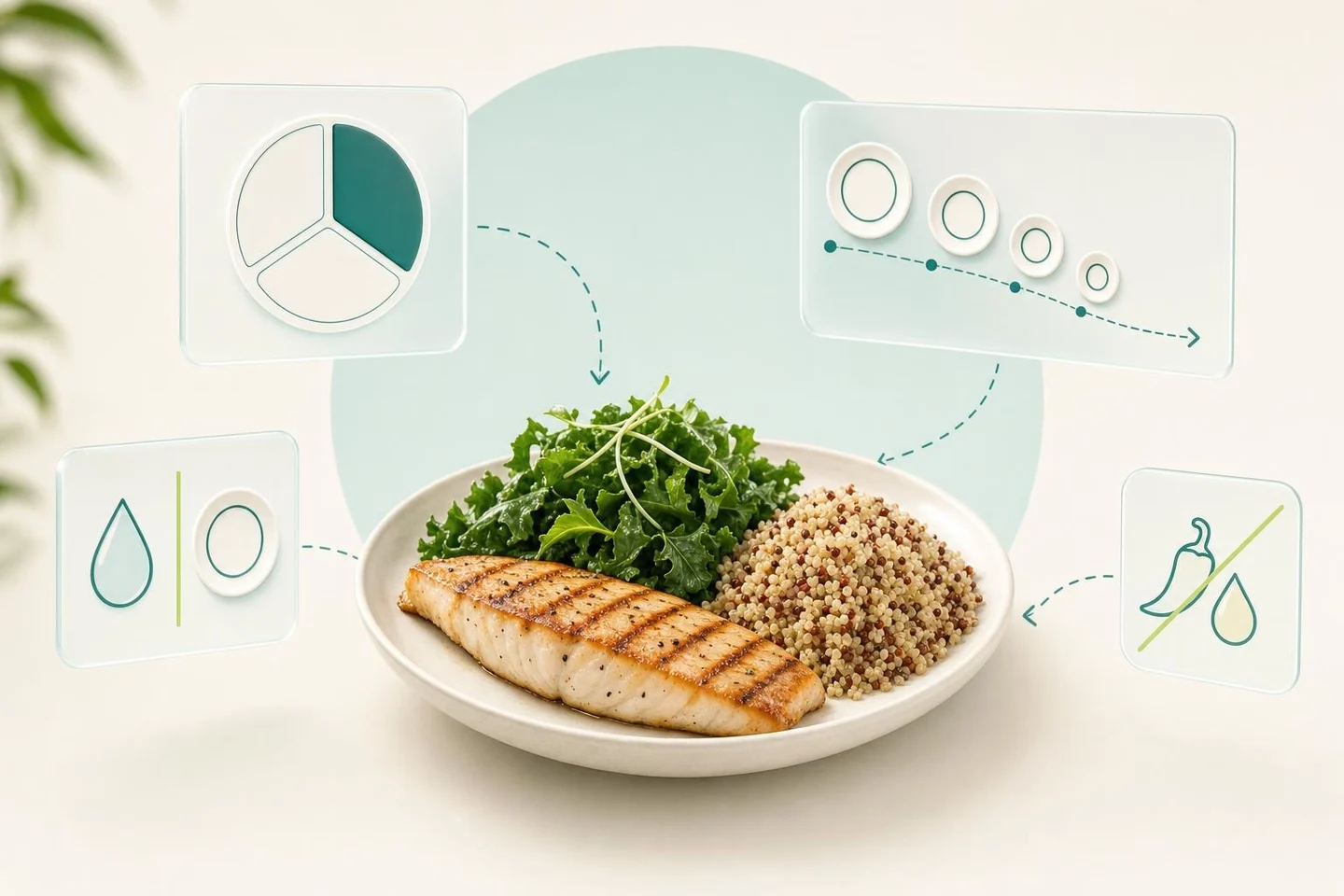
Eating well on a GLP-1 medication usually comes down to a few adjustments: smaller meals eaten more often, protein at most of them, steady fluids, and less of the food that tends to make nausea worse, such as fried, greasy or spicy dishes. There is no official GLP-1 diet. The eating pattern looks like ordinary nutrient-dense eating, scaled to a smaller appetite and a stomach that empties more slowly.
A GLP-1 medication is a drug that acts like glucagon-like peptide-1, a gut hormone involved in appetite and digestion.
The medication changes how much you want to eat and how long food stays in your stomach, so both the amount and the type of food matter. Cleveland Clinic explains that on a GLP-1 agonist food stays in the stomach longer, which is why certain foods (spicy and high-fat ones in particular) contribute more to digestive side effects. Appetite drops at the same time, while the body still needs a variety of nutrients.
Digestive side effects are common. A 2025 perspective in the International Journal of Obesity by Marie Spreckley, Cara Ruggiero and Adrian Brown describes nausea, vomiting and constipation as commonly encountered with these medications, particularly while the dose is being increased and at higher doses. The same paper notes that early satiety, nausea and shifts in food preferences often narrow the range of food people eat.
Our article on semaglutide side effects and how long they last covers the timing of these effects in more detail.
Protein gets attention on these medications because some of the weight lost is muscle. The International Journal of Obesity paper puts the estimate at 30% to 40% of lost weight coming from fat-free mass, a particular concern for older adults and people with sarcopenic obesity. It adds that some evidence suggests GLP-1 medications spare lean mass better than other weight-reduction methods, but that this is not seen in every study.
Those authors recommend prioritizing high-quality protein for adults with obesity who use these medications, ideally alongside resistance training. They are direct about the gap in the evidence: no prospective studies have established the optimal protein amount during GLP-1 treatment. The figures in circulation, 0.8 to 1.6 g per kilogram of body weight per day, or an absolute 80 to 120 g per day, are carried over from what has been proposed after bariatric surgery rather than tested in people taking GLP-1 medications.
Cleveland Clinic keeps it simpler: protein helps keep you full, and it helps your body lose fat rather than muscle. Its examples of lean protein are fish, chicken, tofu and beans.
Structure matters as much as the food itself. The International Journal of Obesity authors borrow from post-bariatric practice here: small, frequent meals, eating slowly, and drinking fluids separately from meals may ease nausea, vomiting and constipation, and dry, low-fat food can be easier to manage during a bad stretch of nausea. They point out that these practical strategies are communicated to patients inconsistently and are absent from most current GLP-1 care.
The food itself is unsurprising. Cleveland Clinic suggests fruits and vegetables such as leafy greens, apples and tomatoes, lean protein such as fish, chicken, tofu and beans, and whole grains such as oats, quinoa and farro. It names protein and fiber as the two nutrients to keep on the plate, because both help you feel full longer and steady your blood sugar, and because fiber helps with the constipation a GLP-1 can cause.
The International Journal of Obesity authors also write that there is no global consensus framework for dietary screening, nutrition treatment or supplementation for people using these medications, and they argue for international guidelines to be developed.
The usual culprits are high-fat, fried and spicy food. Cleveland Clinic lists high-fat food such as pizza and fried chicken, spicy food such as hot sauce and hot peppers, added sugars from juice, soda, candy and desserts, refined carbohydrates such as white bread, crackers and white rice, and processed food such as packaged snacks among the things to limit or avoid. It also says every body is different, so working out your own triggers takes time and some trial and error.
Keeping fat moderate has a second reason behind it. Rapid weight loss by any method raises the risk of gallstones, because the gallbladder empties less and bile becomes supersaturated with cholesterol. The International Journal of Obesity paper reports that gallstones occur in 10% to 30% of patients after bariatric surgery and suggests similar susceptibility during GLP-1 treatment, listing moderate dietary fat, adequate hydration and adequate fiber among the preventive measures that should be studied in people using these medications.
Eating much less food makes nutrient shortfalls more likely. The International Journal of Obesity paper names iron, vitamin B12, vitamin D, calcium and thiamine as nutrients at risk. GLP-1 medications do not cause malabsorption, so the problem is low intake rather than poor uptake, but the authors call the risk considerable and note that no formal consensus recommendations exist for screening people who are starting one of these medications.
They describe baseline dietary review and blood testing as especially important for higher-risk groups, including older adults and people who menstruate. Where that screening is not available, they suggest a once-daily complete multivitamin and mineral supplement as a practical interim step.
Tell your clinician about any history of pancreatitis, gallbladder disease, gastroparesis or other serious digestive conditions, any thyroid cancer in your family, and whether you are pregnant, trying to conceive or breastfeeding. Those answers shape whether a GLP-1 medication is a reasonable option for you and what you would need to watch for.
Get medical advice promptly if you cannot keep fluids down, if vomiting or diarrhea continues for more than a day or two, if you have severe or persistent abdominal pain, or if you notice signs of dehydration such as dizziness, dark urine or urinating much less than usual.
The eating guidance above comes from research on GLP-1 medications in general, including the FDA-approved semaglutide and tirzepatide products. It is not evidence about any compounded version.
SimpleHumans lists compounded semaglutide and compounded tirzepatide as injections available only on a conditional basis, when a clinician documents a patient-specific clinical need. Neither is a substitute for an FDA-approved product. Compounded medications are not FDA-approved, and FDA does not review them for safety, effectiveness or quality. If you want background on how the dual-receptor medication works, see what tirzepatide is.
Not necessarily. Counting is one way to reach the ranges the International Journal of Obesity authors describe, and the absolute figure of 80 to 120 g per day is there partly because some people find it easier to work with than a per-kilogram calculation. Those authors also say no prospective study has established the right amount during GLP-1 treatment, so precision beyond a rough target is not supported by the evidence yet.
Maybe. The International Journal of Obesity paper suggests a once-daily complete multivitamin and mineral supplement containing iron, zinc, copper, B12 and folic acid as a pragmatic interim strategy when standardized nutritional screening is not available. Raise it with the clinician who prescribes for you, since the answer depends on your diet and your blood work.
Small amounts, eaten slowly, more often. The International Journal of Obesity authors suggest small, frequent meals, slow eating and separating fluids from food, with dry, low-fat choices during periods of nausea, drawing on what is used after bariatric surgery.
Cleveland Clinic says fiber helps with the constipation a GLP-1 can cause and helps you feel full longer, and the International Journal of Obesity paper lists adequate fiber and fluid among measures that may reduce gallstone risk during rapid weight loss. Neither source gives a target amount for people taking these medications, which is part of the broader guidance gap the paper describes.
What drug labels, FDA post-marketing reports and observational studies say about GLP-1 gastroparesis, delayed gastric emptying and warning signs.
Read articleFDA labels put semaglutide's half-life at about a week and tirzepatide's at about five days. What that means for pregnancy plans and procedures.
Read articleIncretin hormones are gut hormones that raise insulin after eating. What GLP-1 and GIP do, and how that physiology led to today's medications.
Read articleOpening soon
SimpleHumans is opening soon. Join the early-access list and you'll be first to know when we launch — plus an exclusive discount reserved for people who sign up before we open.
You're on the list
Thanks for joining. We'll email you when we launch, along with your founding-member discount.

