

Night Sweats in Menopause: Causes and What Helps
What causes night sweats in menopause, how they break up sleep, cooling and behavioral steps, treatment options, and the red flags worth a workup.
Read articleCold flashes are sudden chills some women notice in midlife, often right after a hot flash. What causes them, and which other causes to check.
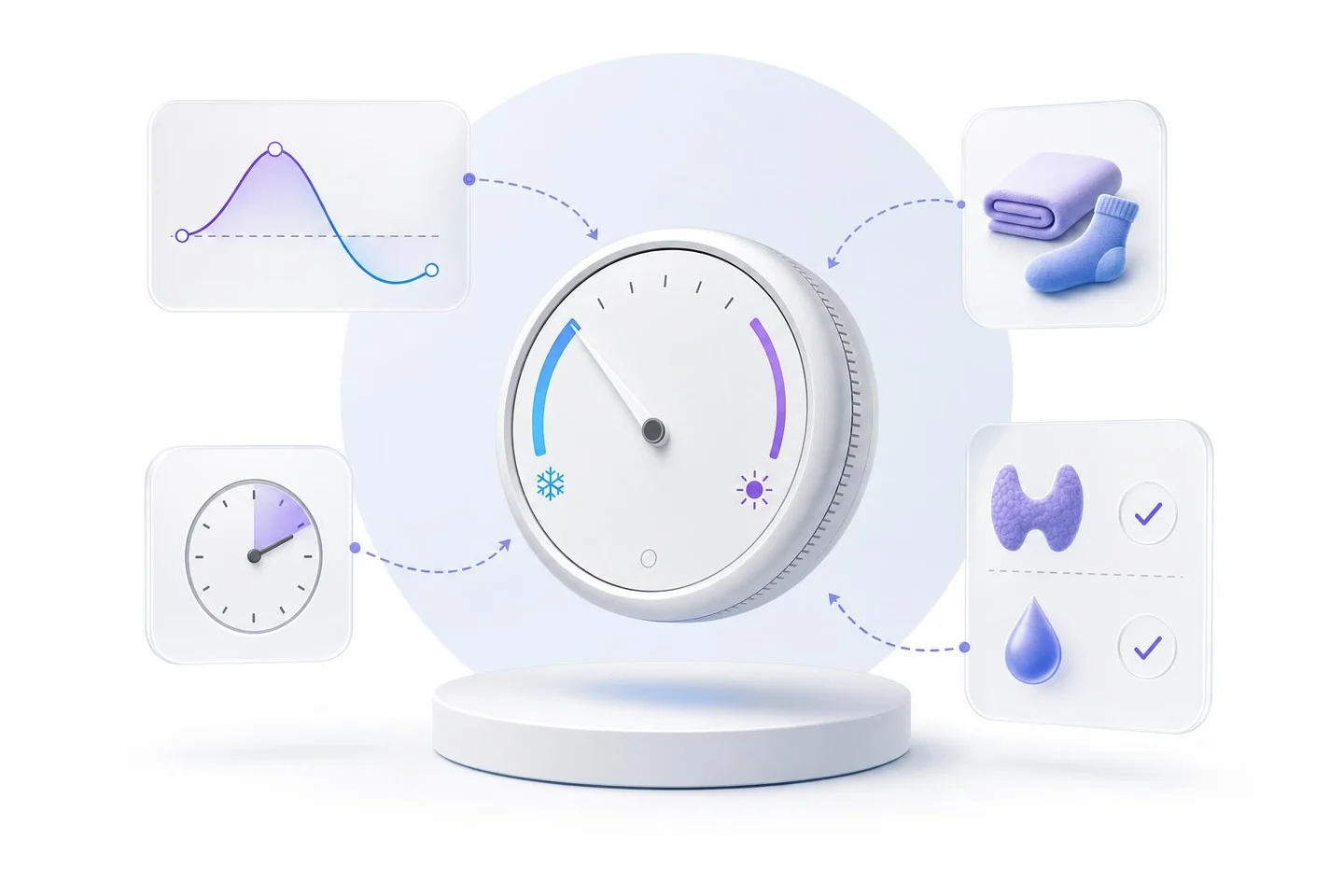
Cold flashes are sudden chills or shivering that some women notice during perimenopause and menopause, often right after a hot flash has faded. Hormone changes in midlife can make the brain's temperature control more sensitive, so you may swing from too warm to too cold within minutes. Chills also come from causes that have nothing to do with menopause, including infection, an underactive thyroid and anemia, which is why a new or persistent pattern of chills is worth describing to a clinician.
A cold flash is a sudden feeling of cold, sometimes with shivering or goosebumps, that comes on quickly and passes on its own.
Cleveland Clinic women's health specialist Holly Thacker says hot flashes are more common, but cold flashes are also something women experience before or during menopause. Cleveland Clinic describes cold flashes as a possible sign of temperature instability, which it calls a very common occurrence for women during midlife. Thacker says that during midlife hormones fluctuate, and with fluctuating hormones the brain's internal thermostat becomes more sensitive, so you may suddenly notice feeling either hot or cold.
The body's circadian rhythm already makes you feel a bit cooler at night, so cold flashes are often noticed before bed or in the middle of the night. They can happen during the day too, though daytime activity makes them less likely.
Most cold flashes run their course quickly and pass within a few minutes at most, according to Cleveland Clinic, although in some cases they can last up to 20 minutes.
Chills themselves are an involuntary response. Cleveland Clinic describes chills as shivering or trembling, shaking, chattering teeth and goosebumps, and explains that shivering makes muscles contract and relax, which warms the body up.
Chills happen when your body's core temperature drops, and a hot flash ends with sweating.
Cleveland Clinic's chills page makes the connection in plain terms: sweating and then getting cold can lower your body temperature too much, and shivering is how the body warms back up. Cleveland Clinic also lists menopausal night sweats and hot flashes among the health-related causes of chills.
This is why the chill can feel worse at night. If you wake up damp from a night sweat, wet skin and bedding keep pulling heat away long after the hot flash is over.
Hot flashes and night sweats have been counted and timed for decades. Cold flashes have not been studied the same way.
Menopause research mostly measures vasomotor symptoms as heat events: how many hot flashes, how severe, how often they wake you. We did not find large studies that define a cold flash, count how many women get them, or test treatments aimed specifically at them. What is available is clinical description, like the Cleveland Clinic account above, rather than trial data.
So two honest statements can sit side by side. Clinicians who see a lot of midlife patients report that cold flashes happen, and the evidence base behind that observation is thin compared with the evidence on hot flashes. If someone tells you a product reliably stops cold flashes, ask what study they are relying on.
Chills are a general symptom, and several common conditions produce them. Cleveland Clinic lists bacterial infections such as pneumonia and urinary tract infections, viruses including the flu, sepsis, parasitic infections, low blood sugar in people with diabetes, panic attacks, hangover, drug withdrawal and some cancers such as leukemia among causes of chills. It also notes that as many as two in three people get chills and shivering after general anesthesia for surgery.
Two more causes overlap closely with menopause symptoms, which is what makes them easy to miss.
An underactive thyroid (hypothyroidism) is one. The National Institute of Diabetes and Digestive and Kidney Diseases lists trouble tolerating cold among its common symptoms. Others on that list are fatigue, weight gain, joint and muscle pain, dry skin or dry thinning hair, heavy or irregular menstrual periods, a slowed heart rate and depression. NIDDK also notes that hypothyroidism develops slowly, so symptoms may go unnoticed for months or even years.
Anemia is the other. The National Heart, Lung, and Blood Institute lists cold hands and feet among the symptoms of iron-deficiency anemia. Fatigue, dizziness or lightheadedness and pale skin appear on the same list. NHLBI notes that mild or moderate iron-deficiency anemia may cause no symptoms at all, while more serious anemia can cause tiredness, shortness of breath or chest pain.
Feeling cold constantly, rather than in short episodes that come and go, points away from a vasomotor explanation and toward one of these. Bring it up with a clinician, who can decide whether testing makes sense based on your history.
Cold flashes linked to menopause are uncomfortable, not dangerous. Chills with certain other signs are a different situation.
Cleveland Clinic advises contacting a healthcare provider if you have chills along with any of the following:
Chills with fever, pain or feeling very unwell suggest infection rather than menopause, and sepsis is on Cleveland Clinic's list of causes. The CDC calls sepsis a life-threatening medical emergency and lists confusion or disorientation, shortness of breath, a high heart rate or weak pulse, clammy or sweaty skin, extreme pain, and fever or shivering or feeling very cold among its signs.
Treat that picture as an emergency rather than something to watch at home. Get emergency care for chills with confusion, fast breathing, a temperature above 104 F or below 95 F, or a sense that you or the person you are with is severely unwell and getting worse.
Cleveland Clinic's suggestions for managing cold flashes are practical and aimed at steadier temperature control rather than at a cure.
Keeping a dry layer within reach at night helps with the chill that follows a night sweat, because damp skin and bedding keep cooling you.
Cleveland Clinic also notes that hormonal and nonhormonal options exist for general temperature instability, and recommends discussing which options are appropriate for you with a women's health specialist. Whether any of them fits depends on your health history, which is a conversation to have with a clinician.
Chills happen when core body temperature drops, and shivering is the body's way of warming back up. Cleveland Clinic notes that sweating and then getting cold can lower body temperature too much, and it includes menopausal hot flashes and night sweats among the causes of chills.
Some women describe cold episodes on their own, and Cleveland Clinic frames both hot and cold sensations as expressions of the same midlife temperature instability. There is no good data on how often cold flashes occur without hot flashes, because studies have generally counted heat events.
They can be part of the picture, but they are not a diagnostic sign on their own. Cleveland Clinic describes cold flashes as occurring before or during menopause, so the symptom alone does not tell you which stage you are in.
You often cannot tell from symptoms alone, which is the point. Trouble tolerating cold is a common hypothyroidism symptom according to NIDDK, and cold hands and feet are listed by NHLBI as a symptom of iron-deficiency anemia. Both share other features with menopause, such as fatigue and changes in periods, so a clinician decides whether testing is warranted.
What causes night sweats in menopause, how they break up sleep, cooling and behavioral steps, treatment options, and the red flags worth a workup.
Read articleSWAN found frequent hot flashes and night sweats lasted a median of 7.4 years, and about 4.5 years past the final menstrual period.
Read articleHot flashes start in the brain's temperature control center. How falling estrogen narrows the thermoneutral zone, and what else causes flushing.
Read articleOpening soon
SimpleHumans is opening soon. Join the early-access list and you'll be first to know when we launch — plus an exclusive discount reserved for people who sign up before we open.
You're on the list
Thanks for joining. We'll email you when we launch, along with your founding-member discount.

